
Tamagringo
Where the tourists are.

Gesina and I first traveled together to Central America in the summer after graduate school. We had heard Costa Rica was too touristy, so in our 40 days of travel we minimized our time here.
What we had really been warned against was the town of Tamarindo. “It’s all Americans.” “Everyone speaks English.” “It isn’t really Costa Rica.” So we skipped it, instead bussing directly from Nicaragua to San Jose and then traveling onward to the less touristed Caribbean coast.
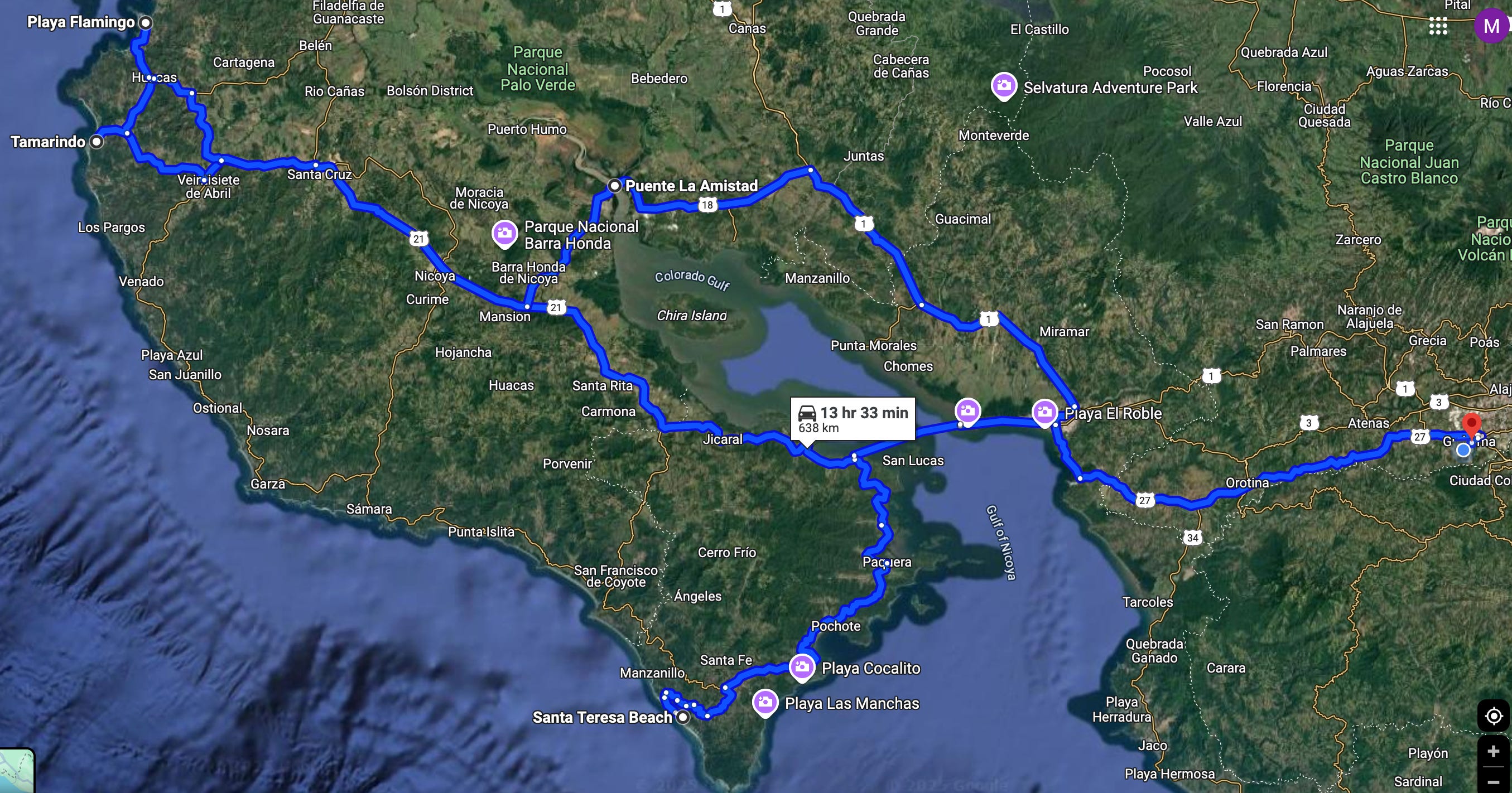
Since we were marking our second anniversary of living in Costa Rica with a trip to Guanacaste, planned to stay relatively close to Tamarindo, and would be driving in the general vicinity, we decided it was appropriate to finally give it a look.
Tamarindo’s pejorative nickname within Costa Rica is Tamagringo, owing to the high orientation toward US/CAN and European expat tourism.
A thing many Costa Ricans will do, upon learning we’ve been living in Costa Rica, is to ask where we’ve been in the country. They expect a list. Then they expect to make suggestions, since there is always more to see. Not once, in two years, has anyone asked us about or suggested Tamarindo.
The straight line distance between Santa Teresa and Tamarindo is just over 60 miles. The drive time along the available paved route above is about four hours. Tamarindo was set as our waypoint en route to an Airbnb in Playa Flamingo. We arrived at about noon, ready for a relaxing dip in the ocean.
Is Tamarindo relaxing? I suppose that depends on who you are.
Tamarindo appears to be the endpoint of an evolution prompted by thousands of Americans asking why Costa Rica isn’t more like Mexico. It’s nice. Pretty built up. Nachos are available everywhere. I’m guessing you can find a great marg at a competitive rate.
It’s the perfect place for people who are comfortable traveling farther away from the US but not comfortable with forgoing anything available in the US (except McDonald’s. Tamarindo don’t have that). The town has a role in the tourism ecosystem, just not for us.
Except that Anders did really want to jump in waves.
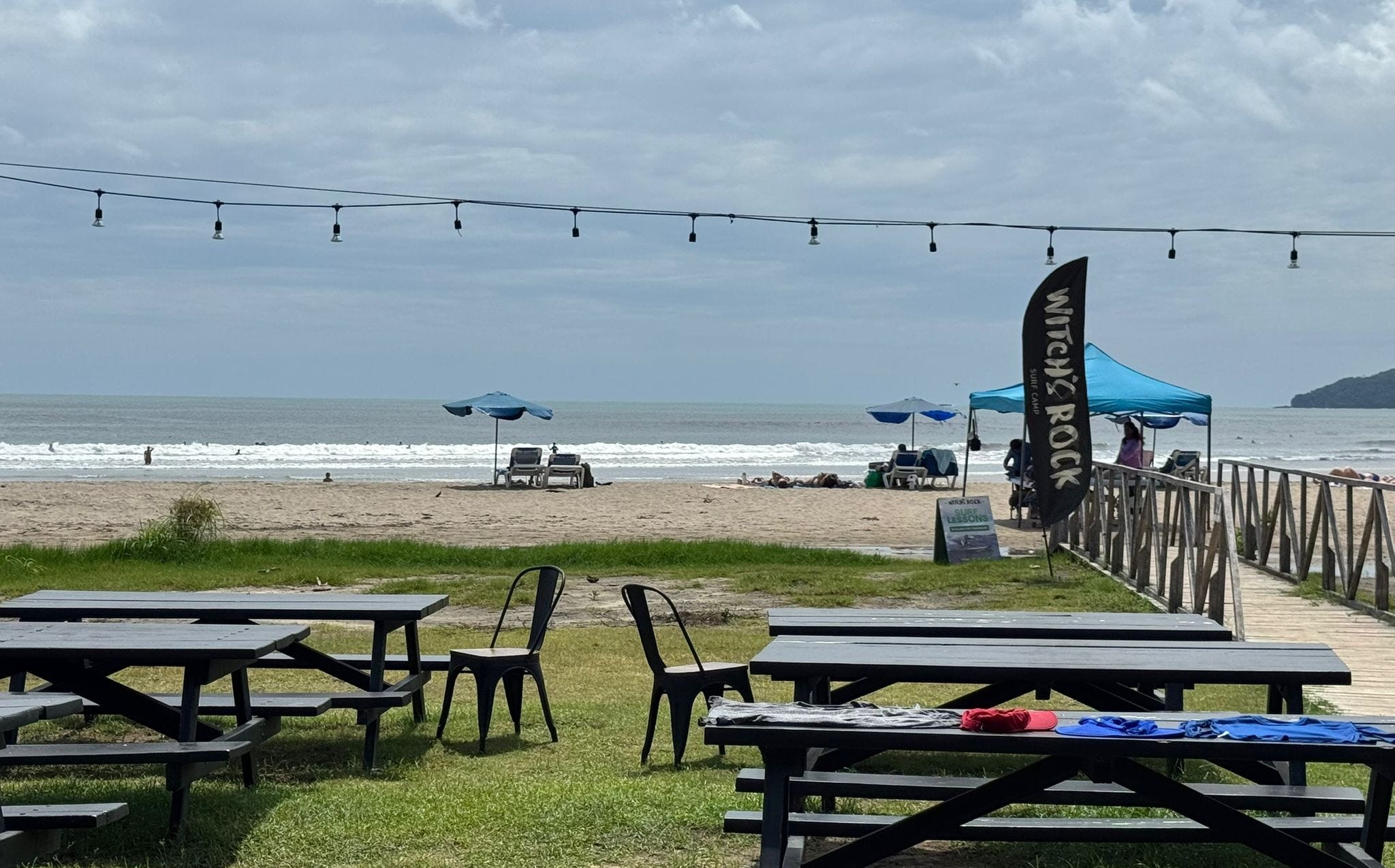
We picked the beginner surfer end of the beach (coincidentally) and watched men fail to listen to instruction and fall repeatedly while women and children met with novice levels of success. The waves were good but not spectacular. We enjoyed a hamburger and a beer at the Volcano Brewing company. None of it was “authentic” Costa Rica and all of it was perfectly fine.
Standing in the waves on the northwest end of the Tamarindo beach presents the duality perfectly: when you look right, the view is the concentrated development of hotels and condos overlooking the beach, but when you look left, the beach runs for miles, nearly empty of human life, backed only by trees.
There are plenty of pockets of American-style development throughout Costa Rica; Tamarindo gets a bad rap because it was early to the game and is easily accessible to foreign tourists, but it is hardly unique. Our next stop was a good example.
Back in the car, it was a short and straightforward drive to our home for the next two evenings: an Airbnb chosen solely for the view.
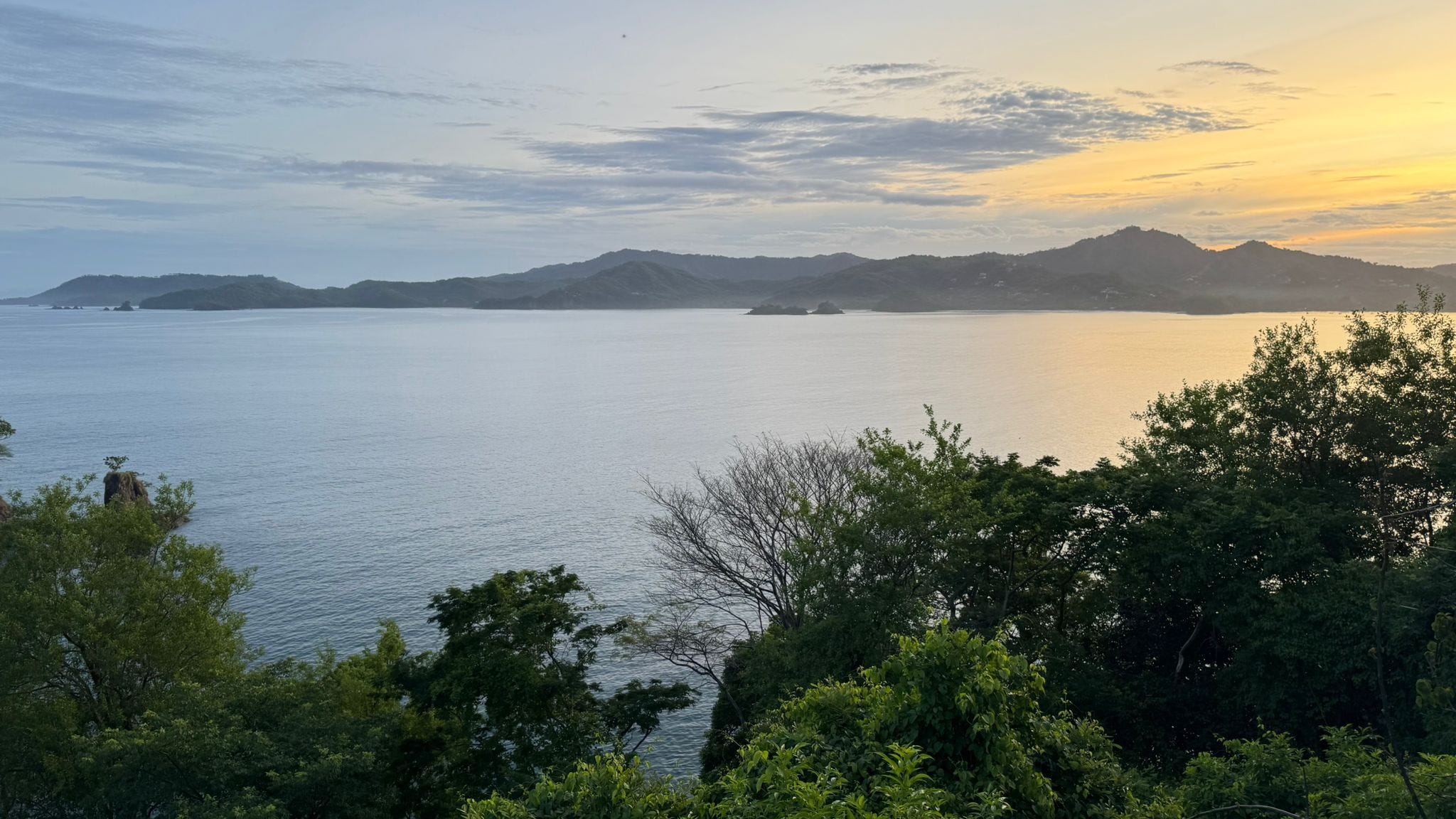
Playa Flamingo (along with neighboring Brasilito and Playa Potrero) is a beach Costa Ricans will ask if we’ve visited.
It’s a beautiful place, and just like the view from the surf in Tamarindo, how you interpret it is based on the direction you choose to look.
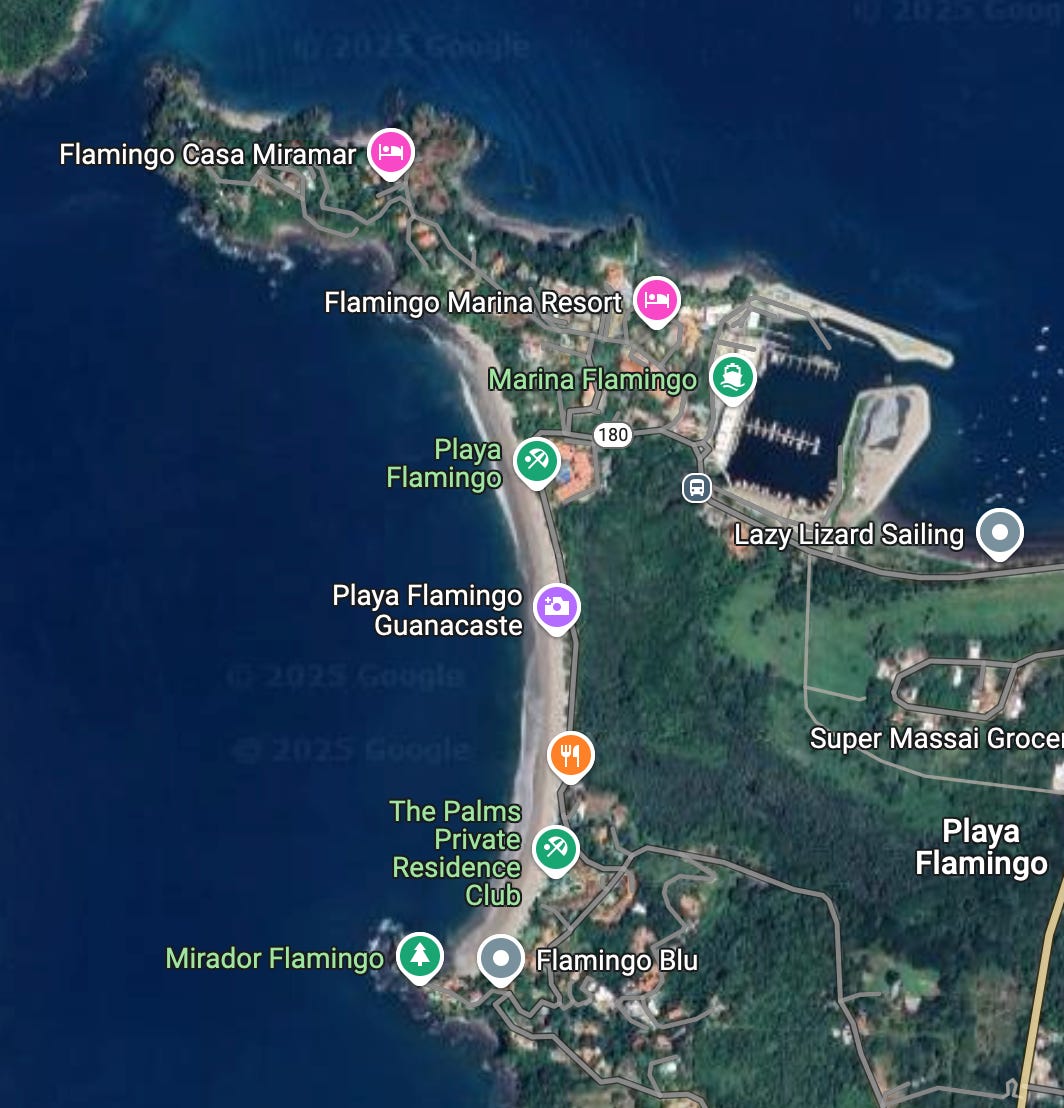
Things that Playa Flamingo has: a Margaritaville resort (north end of the beach by the green ‘Playa Flamingo’, The Palms Private Residence Club, and a very large marina for fishing boats (and, while we were there, one giant yacht).
Conversely, on a week day, the beach is nearly empty. You can park along the road, walk 15 meters, and set up an umbrella and chairs. No one within one hundred meters and uninterrupted views up and down the coastline.
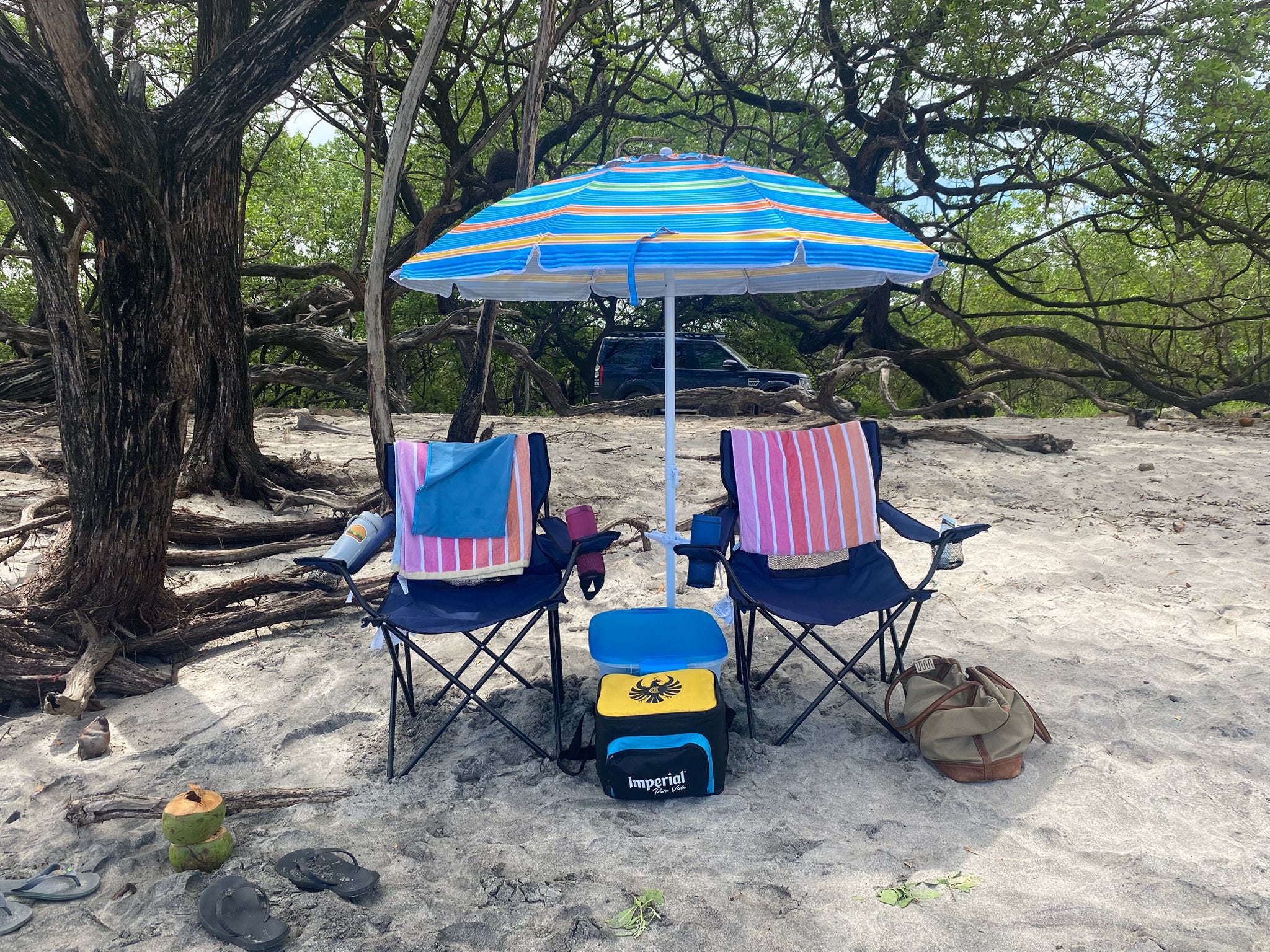
The dichotomy of the beach extends to the food options.
You can eat a meal in a very modern US-style sports bar (JP’s Grill, it looks nice and is well reviewed, we didn’t go). You can also drive five minutes away and eat fresh seafood at picnic tables along the Playa Potrero beach while chickens wander around and local kids play soccer (Estero Azul, it is very nice, we had a great meal there).

Playa Flamingo, like Tamarindo, allows for a very English-centric, resort/marina sanitized version of Costa Rica. But it also allows for a completely localized version. This is where Tamarindo appears to fall short: optionality. It went all-in on a concentrated, sanitized approach.
For Tamarindo, I’m not sure that’s a problem. You do not need to drive far to find the optionality, nor do all tourists want or need the local approach to enjoying the beach.
Will we go back to Tamarindo? Probably not any time soon. Nor Playa Flamingo. But we’d recommend them both, to different people.
Plus, there are about 100 more beaches on our list to explore.